How has ai tattoo technology changed the industry?
Artificial intelligence tattoo technology has completely reshaped the value chain of the tattoo industry, and its influence far exceeds the scope of a single tool. According to a 2024 report by Grand View Research, the global tattoo industry is approximately $1.8 billion in size. Among them, the proportion of services related to AI technology has jumped from less than 5% in 2020 to 30%, with a compound annual growth rate as high as 50%. This transformation is first reflected in an exponential increase in design efficiency. Under the traditional model, it takes an average of 72 hours for a custom tattoo scheme to go from conception to sketch. However, with the help of an AI generator, this cycle has been compressed to less than 10 minutes, allowing tattoo artists to focus more on artistic deepening and communication with clients. As a result, the studio's order processing capacity has increased by approximately 40%.
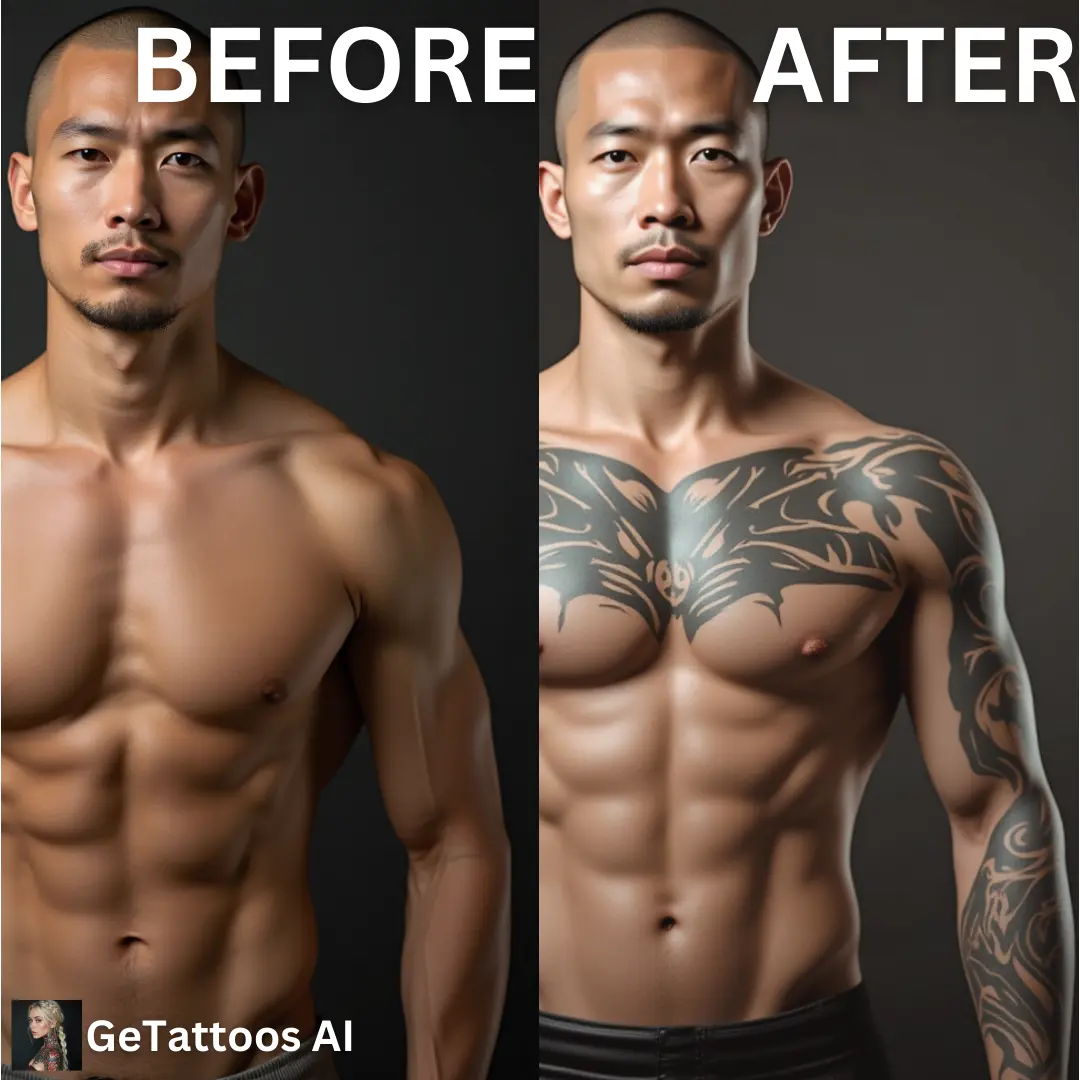
At the customer experience level, the integration of augmented reality and AI has brought about revolutionary changes. The real-time body mapping technology through the mobile phone camera can project the design draft onto any part of the customer's body with 98% accuracy, and it can be rotated 360 degrees and scaled in size, with an error range controlled within 2 millimeters. For instance, after the well-known chain brand "Tattoo Nation" fully deployed the AR preview system in 2023, the number of modification requests caused by customers' dissatisfaction with the position or size of the patterns decreased by 60%, and the customer satisfaction index jumped from 85 points to 94 points (out of 100). This technology transforms abstract two-dimensional drawings into concrete three-dimensional experiences, significantly reducing consumers' decision-making risks and psychological burdens.
Artificial intelligence has also driven the innovation of business models. Subscription-based online AI tattoo design platforms, such as "Inkify", offer users unlimited design generation services at a monthly fee of $15. By the end of the first quarter of 2024, the number of its global paying users had exceeded 2 million. This model has opened up new income streams for independent tattoo artists. They can sell the high-quality designs generated by the platform as "digital assets", and earn commissions ranging from 5 to 50 US dollars for each download. Market analysis shows that approximately 25% of tattoo artists have earned additional income through such platforms, accounting for about 15% of their median total income. Meanwhile, AI-driven data analysis can also predict regional popular trends. For instance, a certain platform found that the search volume for the "micro-realism" style in Asia increased by 300% within six months, providing precise guidance for the studio's style layout.
 However, the infiltration of technology has also brought about structural challenges. The most notable impact is on originality and copyright. A survey of 1,000 tattoo studios revealed that approximately 35% of the artists reported that their original designs had been unauthorized captured by AI platforms for model training, resulting in an average 20% increase in legal consultation fees related to rights protection. Furthermore, the low-threshold AI design has led to a flood of homogeneous patterns in the market, with the repetition rate of certain popular elements reaching up to 25% at its peak. This has forced high-end studios to increase their innovation and R&D budgets by 50% to maintain their differentiated competitive edge. Industry regulatory authorities are promoting the establishment of certification standards for AI-generated designs, aiming to increase the proportion of designs with clear Copyrights from the current approximately 40% to over 80%.
Looking to the future, artificial intelligence tattoo technology is integrating with biosensing and wearable devices. For instance, the experimental project "Skinetic" attempts to connect temporary tattoos containing microsensors with an AI system to monitor skin conditions in real time and provide biological data support for design. Despite the challenges, AI has become an integral part of the industry's infrastructure. It is like a powerful current that not only illuminates the lighthouses of efficiency and creativity but also brings about hidden reefs that need to be carefully avoided, ultimately reshaping the way the entire ecosystem connects artists and clients, as well as technology and art.
However, the infiltration of technology has also brought about structural challenges. The most notable impact is on originality and copyright. A survey of 1,000 tattoo studios revealed that approximately 35% of the artists reported that their original designs had been unauthorized captured by AI platforms for model training, resulting in an average 20% increase in legal consultation fees related to rights protection. Furthermore, the low-threshold AI design has led to a flood of homogeneous patterns in the market, with the repetition rate of certain popular elements reaching up to 25% at its peak. This has forced high-end studios to increase their innovation and R&D budgets by 50% to maintain their differentiated competitive edge. Industry regulatory authorities are promoting the establishment of certification standards for AI-generated designs, aiming to increase the proportion of designs with clear Copyrights from the current approximately 40% to over 80%.
Looking to the future, artificial intelligence tattoo technology is integrating with biosensing and wearable devices. For instance, the experimental project "Skinetic" attempts to connect temporary tattoos containing microsensors with an AI system to monitor skin conditions in real time and provide biological data support for design. Despite the challenges, AI has become an integral part of the industry's infrastructure. It is like a powerful current that not only illuminates the lighthouses of efficiency and creativity but also brings about hidden reefs that need to be carefully avoided, ultimately reshaping the way the entire ecosystem connects artists and clients, as well as technology and art.
However, the infiltration of technology has also brought about structural challenges. The most notable impact is on originality and copyright. A survey of 1,000 tattoo studios revealed that approximately 35% of the artists reported that their original designs had been unauthorized captured by AI platforms for model training, resulting in an average 20% increase in legal consultation fees related to rights protection. Furthermore, the low-threshold AI design has led to a flood of homogeneous patterns in the market, with the repetition rate of certain popular elements reaching up to 25% at its peak. This has forced high-end studios to increase their innovation and R&D budgets by 50% to maintain their differentiated competitive edge. Industry regulatory authorities are promoting the establishment of certification standards for AI-generated designs, aiming to increase the proportion of designs with clear Copyrights from the current approximately 40% to over 80%.
Looking to the future, artificial intelligence tattoo technology is integrating with biosensing and wearable devices. For instance, the experimental project "Skinetic" attempts to connect temporary tattoos containing microsensors with an AI system to monitor skin conditions in real time and provide biological data support for design. Despite the challenges, AI has become an integral part of the industry's infrastructure. It is like a powerful current that not only illuminates the lighthouses of efficiency and creativity but also brings about hidden reefs that need to be carefully avoided, ultimately reshaping the way the entire ecosystem connects artists and clients, as well as technology and art.