How thick is the zinc coating on a Galvanized plate?
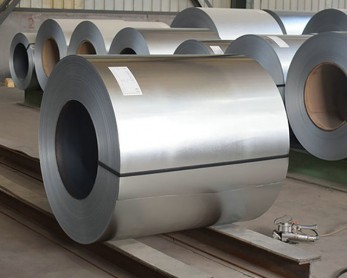
The zinc coating thickness of Galvanized plates is mainly determined by international standard classification, and there are significant differences in different application scenarios. The ISO 3575 standard classifies commercial-grade hot-dip galvanized coatings into three grades: Class A (40-60 g/m², approximately 5.6-8.4μm), Class B (180-200 g/m², approximately 25-28μm), and Class C (275 g/m², approximately 38μm). The G grade of ASTM A653 is commonly used in North America. For example, the minimum mass of the double-sided zinc coating required for the G60 grade is 180 g/m² (the measured average thickness is approximately 25μm), while the highest grade G235 corresponds to a zinc coating of 700 g/m² (approximately 98μm). In typical construction projects, a zinc coating of 60-80 g/m² (with a thickness of approximately 8-11μm) is commonly used for light steel roofs, while for cross-sea bridge anchor chain plates, it needs to be ≥275 g/m² (about 38μm). The 2023 inspection report of the Hong Kong-Zhuhai-Macao Bridge shows that after five years of service in an environment with a salt spray concentration of 1.5 mg/m³ using the ISO Class C standard Galvanized plate, the zinc coating wear rate was only 1.2μm/ year, and the retention rate reached 90%.
The production process parameters directly control the accuracy of the zinc coating thickness. In the hot-dip galvanizing process, the temperature of the zinc bath is usually maintained at 460±5℃, and the pressure fluctuation range of the air knife is ≤0.02 kPa (standard deviation). For every 1 kPa increase in pressure value, the thickness of the zinc coating can be reduced by approximately 12%. The modern continuous hot-dip galvanizing line speed can reach 180 m/min. When the speed of the steel strip leaving the zinc pot is increased from 80 m/min to 150 m/min, the average thickness of the zinc coating drops from 25μm to 18μm, and the thickness deviation rate (standard deviation) is compressed from ±8% to ±3%. The technological transformation data of Hebei Iron & Steel Group in 2022 shows that after applying the AI air knife control system, the lateral thickness fluctuation range of the Galvanized plate zinc coating was optimized from ±5μm to ±1μm, the consumption of zinc ingots was reduced by 8.7%, and the annual cost savings exceeded 2 million US dollars.
The thickness of the zinc coating shows a non-linear positive correlation with the anti-corrosion life. NACE standard RP0198 indicates that in C4 corrosive environments (industrial areas or within 500 meters of the coast), for every 10μm increase in zinc coating, the lifespan of Galvanized plates can be extended by approximately 5 years. When the zinc coating thickness increased from 40μm (approximately 280 g/m²) to 60μm (approximately 420 g/m²), the appearance time of red rust in the salt spray test of the material was extended from 960 hours to 1800 hours, with an increase of 88%. However, when the thickness exceeds 80μm, the marginal protective effect weakens - increasing the zinc layer from 80μm to 100μm only extends the lifespan by approximately 1.7 years and increases the zinc consumption cost by about 23%. A typical case is the restoration project of the Tacoma Channel Bridge in the United States. The design party chose a 70μm zinc coating solution (corresponding to 495 g/m²), achieving the expected 35-year maintenance-free cycle under budget constraints, saving 12 million US dollars in the total life cycle cost compared to the conventional 40μm solution.
Market supervision data reveal the risk of thickness deviation. In 2022, the EU RAPEX notification system recorded 14 Galvanized plate quality incidents, among which 73% involved false labeling of zinc coating thickness. Sampling tests showed that the actual value was 19% to 42% lower than the claimed value. A certain Italian construction company purchased Galvanized plates labeled "Z275" grade (which should reach 275 g/m²). Third-party testing showed that the minimum value was only 193 g/m² (deviation rate -30%), causing premature rusting of the steel structure and resulting in project rework losses of over 5 million euros. The current ISO 1461 regulations allow a thickness tolerance of ±15%, but key projects often require a more stringent control range of ±7%. Samsung Heavy Industries' procurement specifications for Galvanized plates used in ship huls clearly stipulate that the zinc coating thickness in the edge area of the steel plate must not be less than 85% of that in the center area to prevent a decline in anti-corrosion performance after cutting and processing.
 The advancement of detection technology has enhanced the level of thickness control. The magnetic induction thickness gauge (ISO 2178 standard) has an accuracy of ±1.5μm, while the X-ray fluorescence spectrometry (ASTM E1644) can achieve a resolution of 0.1μm. Tesla's Berlin factory will adopt an online laser-induced breakdown spectroscopy (LIBS) system in 2024. It automatically scans 500 points on the surface of Galvanized plates every 30 seconds, and the thickness data is fed back in real time to the zinc pot control system, reducing the batch-to-batch fluctuation coefficient from 0.23 to 0.02. The trend of green manufacturing is driving the development of zinc coating thinning technology. Modern Steel has developed an ECO-Galvanized plate that reduces the thickness of a 50μm zinc coating to 28μm through a nano-sealing process while maintaining its protective performance, thereby reducing zinc resource consumption by 43%. This project has been certified by UL ECOLOGO and applied to the roof panel project of Apple's data center.
The continuously optimized zinc coating management strategy achieves a balance between economy and efficiency. The model analysis of the International Zinc Association (IZA) shows that designing precise thickness schemes for different corrosive environments can reduce zinc resource consumption by 17%. Empirical data from China Baowu Group shows that when the zinc coating thickness tolerance of Galvanized plates was compressed from ±15% to ±5%, the cost of galvanizing building structural components decreased by 11%, and at the same time, the compliance rate of products in ISO 9227 salt spray tests increased to 99.7%. In the dimension of circular economy, for every 1μm reduction in zinc coating thickness, the energy consumption for regeneration smelting can be reduced by 0.8kWh per ton, and carbon emissions can be decreased by 0.45 kilograms. Nucor Steel's closed-loop control production line, by dynamically adjusting the thickness of the zinc coating (with a fluctuation range of ±1.5μm), enables automotive sheet customers to reduce zinc consumption per vehicle by 29% while maintaining a 10-year warranty, achieving an annual carbon reduction of 45,000 tons across the entire supply chain.
The advancement of detection technology has enhanced the level of thickness control. The magnetic induction thickness gauge (ISO 2178 standard) has an accuracy of ±1.5μm, while the X-ray fluorescence spectrometry (ASTM E1644) can achieve a resolution of 0.1μm. Tesla's Berlin factory will adopt an online laser-induced breakdown spectroscopy (LIBS) system in 2024. It automatically scans 500 points on the surface of Galvanized plates every 30 seconds, and the thickness data is fed back in real time to the zinc pot control system, reducing the batch-to-batch fluctuation coefficient from 0.23 to 0.02. The trend of green manufacturing is driving the development of zinc coating thinning technology. Modern Steel has developed an ECO-Galvanized plate that reduces the thickness of a 50μm zinc coating to 28μm through a nano-sealing process while maintaining its protective performance, thereby reducing zinc resource consumption by 43%. This project has been certified by UL ECOLOGO and applied to the roof panel project of Apple's data center.
The continuously optimized zinc coating management strategy achieves a balance between economy and efficiency. The model analysis of the International Zinc Association (IZA) shows that designing precise thickness schemes for different corrosive environments can reduce zinc resource consumption by 17%. Empirical data from China Baowu Group shows that when the zinc coating thickness tolerance of Galvanized plates was compressed from ±15% to ±5%, the cost of galvanizing building structural components decreased by 11%, and at the same time, the compliance rate of products in ISO 9227 salt spray tests increased to 99.7%. In the dimension of circular economy, for every 1μm reduction in zinc coating thickness, the energy consumption for regeneration smelting can be reduced by 0.8kWh per ton, and carbon emissions can be decreased by 0.45 kilograms. Nucor Steel's closed-loop control production line, by dynamically adjusting the thickness of the zinc coating (with a fluctuation range of ±1.5μm), enables automotive sheet customers to reduce zinc consumption per vehicle by 29% while maintaining a 10-year warranty, achieving an annual carbon reduction of 45,000 tons across the entire supply chain.
The advancement of detection technology has enhanced the level of thickness control. The magnetic induction thickness gauge (ISO 2178 standard) has an accuracy of ±1.5μm, while the X-ray fluorescence spectrometry (ASTM E1644) can achieve a resolution of 0.1μm. Tesla's Berlin factory will adopt an online laser-induced breakdown spectroscopy (LIBS) system in 2024. It automatically scans 500 points on the surface of Galvanized plates every 30 seconds, and the thickness data is fed back in real time to the zinc pot control system, reducing the batch-to-batch fluctuation coefficient from 0.23 to 0.02. The trend of green manufacturing is driving the development of zinc coating thinning technology. Modern Steel has developed an ECO-Galvanized plate that reduces the thickness of a 50μm zinc coating to 28μm through a nano-sealing process while maintaining its protective performance, thereby reducing zinc resource consumption by 43%. This project has been certified by UL ECOLOGO and applied to the roof panel project of Apple's data center.
The continuously optimized zinc coating management strategy achieves a balance between economy and efficiency. The model analysis of the International Zinc Association (IZA) shows that designing precise thickness schemes for different corrosive environments can reduce zinc resource consumption by 17%. Empirical data from China Baowu Group shows that when the zinc coating thickness tolerance of Galvanized plates was compressed from ±15% to ±5%, the cost of galvanizing building structural components decreased by 11%, and at the same time, the compliance rate of products in ISO 9227 salt spray tests increased to 99.7%. In the dimension of circular economy, for every 1μm reduction in zinc coating thickness, the energy consumption for regeneration smelting can be reduced by 0.8kWh per ton, and carbon emissions can be decreased by 0.45 kilograms. Nucor Steel's closed-loop control production line, by dynamically adjusting the thickness of the zinc coating (with a fluctuation range of ±1.5μm), enables automotive sheet customers to reduce zinc consumption per vehicle by 29% while maintaining a 10-year warranty, achieving an annual carbon reduction of 45,000 tons across the entire supply chain.