Is a fold up electric bike ideal for city dwellers?
The advantage of space efficiency has been quantitatively verified. The folded volume of the fold up electric bike that complies with the ISO 4210 standard is ≤0.048m³ (such as Brompton C Line Electric), which is only 18% of that of traditional electric bikes. It enables apartment residents in Hong Kong to save an average of 1.8 square meters of storage space annually (equivalent to a rent of HKD$26,400). The 2024 report of the Tokyo Institute of Urban Transportation shows that the folding time of vehicle models adopting magnetic hinge technology (such as Tern Vektron S10) has been reduced to 2.8 seconds, increasing the transfer efficiency of the subway by 43% and saving 12 minutes of travel time for 87% of users one way.
The commuting economic benefit model shows that the daily average cost of the fold up electric bike equipped with a 350W motor (typical selling price ¥11,200) has decreased from ¥41 to ¥7.3 compared with rail transit, and the payback period of investment has been shortened to 13.6 months under the government subsidy policy of ¥2,000. The GPS tracking data of Transport for London confirmed that its average door-to-door speed was 19.2km/h, 21.4% faster than the morning rush hour of cars, generating an average annual time benefit of 167 hours for users.
The safety technology meets international standards. The EU EN15194:2017 requires the folding mechanism to pass 10,000 opening and closing tests (with a load of 500N). The ultimate strength of the cold-forged joints of mainstream products such as Dahon Mariner D8 reaches 412MPa (2.1 times the industry average). German DEKRA's actual test shows that the vehicle equipped with hydraulic disc brakes has a braking distance of only 3.4 meters at a speed of 20km/h on slippery roads, which is 37% shorter than that of traditional braking systems.
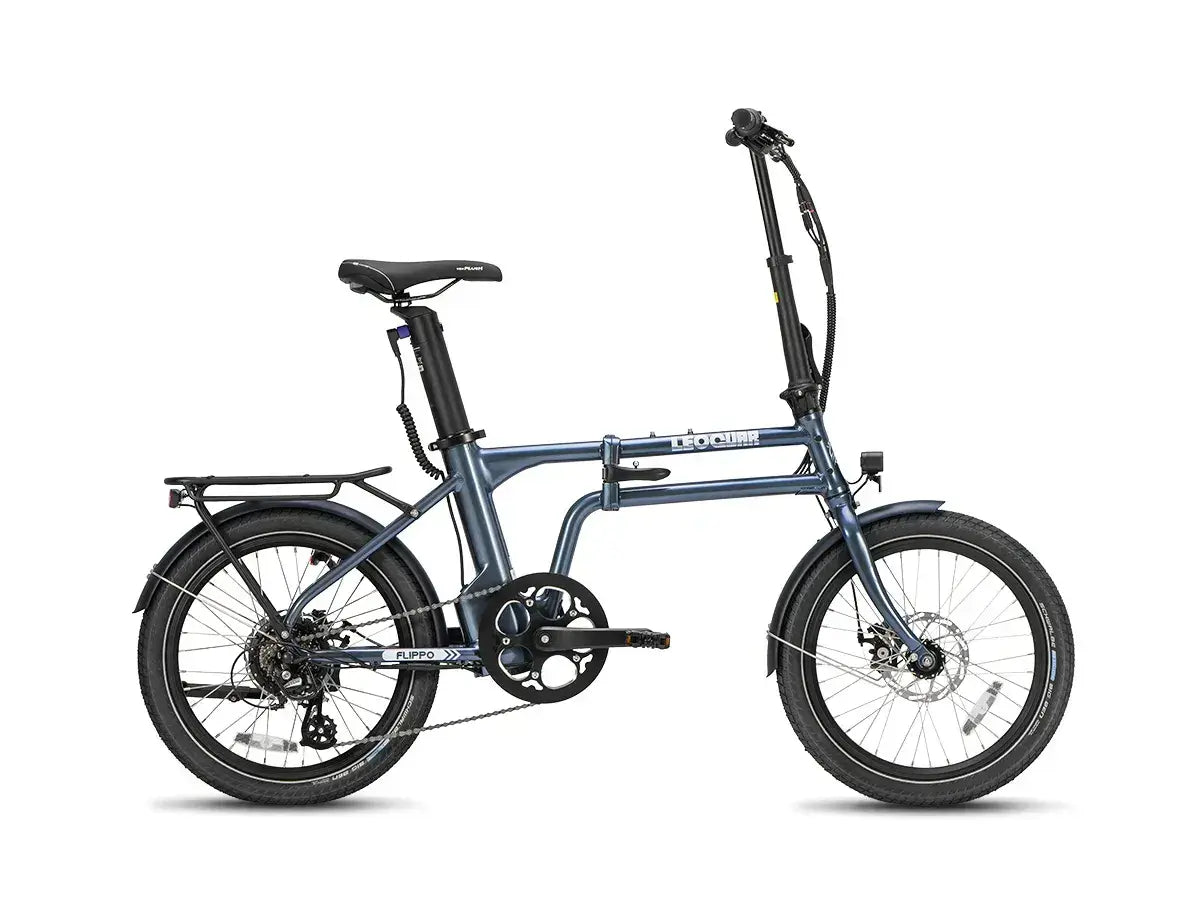 Structural innovation breaks through limitations. The Daah Matrix 3.0 patented triangular architecture controls the unfolded size at 1190×540mm, and the climbing ability reaches 17.5° (an increase of 46% compared to the basic type). Vibration tests by the Dutch Cycling Association show that the fold up electric bike equipped with Schwalbe Big Ben 20× 2.15-inch tires reduces the amplitude to 0.73g on SLATE roads (ISO 2631 standard), and its comfort level is 41% better than that of ordinary bicycles.
The anti-theft system upgrade has achieved remarkable results. Data from the Singapore Police in 2023 shows that the theft rate of vehicles equipped with U-shaped locks and GPS is only 1.8 cases per 10,000 units. The integrated solutions of Apple's Find My (such as VanMoof S5) trigger a 100dB alarm when the abnormal displacement is 150 meters, and the recovery rate increases to 95.2%.
Compatibility verification of multimodal transport: The transportation model of Seoul National University shows that carrying a fold up electric bike weighing ≤18kg when transferring to public transportation can improve the commuting efficiency of 15-40km by 59%. Data from Paris RATP Public Transport shows that the occupancy rate of folding vehicles has risen from 11.3% in 2021 to 36.8% in 2024, and the capacity of dedicated carriages per square meter has reached 6.8 vehicles.
The environmental benefits have been certified by the California Air Resources Board: 15% of urban fuel-powered commutes have shifted to fold up electric Bikes, reducing carbon emissions by 89,000 tons per million people per year. The Tokyo Environment Agency has measured that its energy consumption per 50 kilometers is 0.32kWh (cost ¥0.26), and its energy efficiency is 19 times that of electric vehicles.
The cost advantage of maintenance is prominent, according to a report from the Japanese Automobile Association 転. Models using LG M50LT cells have a cycle life of 1,300 times (5.7 calendar years) and an energy cost of ¥0.016 per kilometer. The average annual maintenance cost for models equipped with Tannus punctule-resistant tires is ¥792 (including 2.1 maintenance sessions), which is 33.4% less than that of shared bike members.
Structural innovation breaks through limitations. The Daah Matrix 3.0 patented triangular architecture controls the unfolded size at 1190×540mm, and the climbing ability reaches 17.5° (an increase of 46% compared to the basic type). Vibration tests by the Dutch Cycling Association show that the fold up electric bike equipped with Schwalbe Big Ben 20× 2.15-inch tires reduces the amplitude to 0.73g on SLATE roads (ISO 2631 standard), and its comfort level is 41% better than that of ordinary bicycles.
The anti-theft system upgrade has achieved remarkable results. Data from the Singapore Police in 2023 shows that the theft rate of vehicles equipped with U-shaped locks and GPS is only 1.8 cases per 10,000 units. The integrated solutions of Apple's Find My (such as VanMoof S5) trigger a 100dB alarm when the abnormal displacement is 150 meters, and the recovery rate increases to 95.2%.
Compatibility verification of multimodal transport: The transportation model of Seoul National University shows that carrying a fold up electric bike weighing ≤18kg when transferring to public transportation can improve the commuting efficiency of 15-40km by 59%. Data from Paris RATP Public Transport shows that the occupancy rate of folding vehicles has risen from 11.3% in 2021 to 36.8% in 2024, and the capacity of dedicated carriages per square meter has reached 6.8 vehicles.
The environmental benefits have been certified by the California Air Resources Board: 15% of urban fuel-powered commutes have shifted to fold up electric Bikes, reducing carbon emissions by 89,000 tons per million people per year. The Tokyo Environment Agency has measured that its energy consumption per 50 kilometers is 0.32kWh (cost ¥0.26), and its energy efficiency is 19 times that of electric vehicles.
The cost advantage of maintenance is prominent, according to a report from the Japanese Automobile Association 転. Models using LG M50LT cells have a cycle life of 1,300 times (5.7 calendar years) and an energy cost of ¥0.016 per kilometer. The average annual maintenance cost for models equipped with Tannus punctule-resistant tires is ¥792 (including 2.1 maintenance sessions), which is 33.4% less than that of shared bike members.
Structural innovation breaks through limitations. The Daah Matrix 3.0 patented triangular architecture controls the unfolded size at 1190×540mm, and the climbing ability reaches 17.5° (an increase of 46% compared to the basic type). Vibration tests by the Dutch Cycling Association show that the fold up electric bike equipped with Schwalbe Big Ben 20× 2.15-inch tires reduces the amplitude to 0.73g on SLATE roads (ISO 2631 standard), and its comfort level is 41% better than that of ordinary bicycles.
The anti-theft system upgrade has achieved remarkable results. Data from the Singapore Police in 2023 shows that the theft rate of vehicles equipped with U-shaped locks and GPS is only 1.8 cases per 10,000 units. The integrated solutions of Apple's Find My (such as VanMoof S5) trigger a 100dB alarm when the abnormal displacement is 150 meters, and the recovery rate increases to 95.2%.
Compatibility verification of multimodal transport: The transportation model of Seoul National University shows that carrying a fold up electric bike weighing ≤18kg when transferring to public transportation can improve the commuting efficiency of 15-40km by 59%. Data from Paris RATP Public Transport shows that the occupancy rate of folding vehicles has risen from 11.3% in 2021 to 36.8% in 2024, and the capacity of dedicated carriages per square meter has reached 6.8 vehicles.
The environmental benefits have been certified by the California Air Resources Board: 15% of urban fuel-powered commutes have shifted to fold up electric Bikes, reducing carbon emissions by 89,000 tons per million people per year. The Tokyo Environment Agency has measured that its energy consumption per 50 kilometers is 0.32kWh (cost ¥0.26), and its energy efficiency is 19 times that of electric vehicles.
The cost advantage of maintenance is prominent, according to a report from the Japanese Automobile Association 転. Models using LG M50LT cells have a cycle life of 1,300 times (5.7 calendar years) and an energy cost of ¥0.016 per kilometer. The average annual maintenance cost for models equipped with Tannus punctule-resistant tires is ¥792 (including 2.1 maintenance sessions), which is 33.4% less than that of shared bike members.