Why is there fuel pressure drop after warm-up?
The thermal expansion effect significantly alters the clearance of precision components. The design clearance of the high-pressure Fuel Pump plunger pair in modern direct injection systems is only 3-5μm. When the temperature rises from 25℃ to 85℃, the expansion coefficient of the stainless steel plunger is approximately 10.8×10⁻⁶/℃, causing the fit clearance to expand to 8-10μm. Experimental data show that for every 1μm increase in the gap, the internal fuel leakage increases by 15%. On the Audi EA888 Gen3 engine, the measured hot leakage rate reached 12L/h (only 4L/h when cold), causing the rail pressure to drop from 150bar to 136bar (a decrease of 9.3%). Bosch's technical bulletin indicates that such leakage has reduced the actual effective utilization rate of fuel by 18%.
The physical properties of fuel change dynamically with temperature. The density of gasoline was 745kg/m³ at 20℃. When it rose to 60℃, it decreased to 725kg/m³ (a decrease of 2.7%), and the viscosity decreased simultaneously from 0.6mPa·s to 0.45mPa·s (a decrease of 25%). This change has reduced the volumetric efficiency of the electric fuel pump by approximately 8 percentage points. The actual measurement data of the Mercedes-Benz M276 engine shows that the pump efficiency is 78% at an oil temperature of 40℃ and drops to 69% at 80℃. What is more serious is that the fuel vapor pressure is 0.7bar at 40℃ and sharply increases to 1.8bar at 80℃, causing cavitation in the General Motors LTG engine and resulting in an instantaneous flow fluctuation of ±23%.
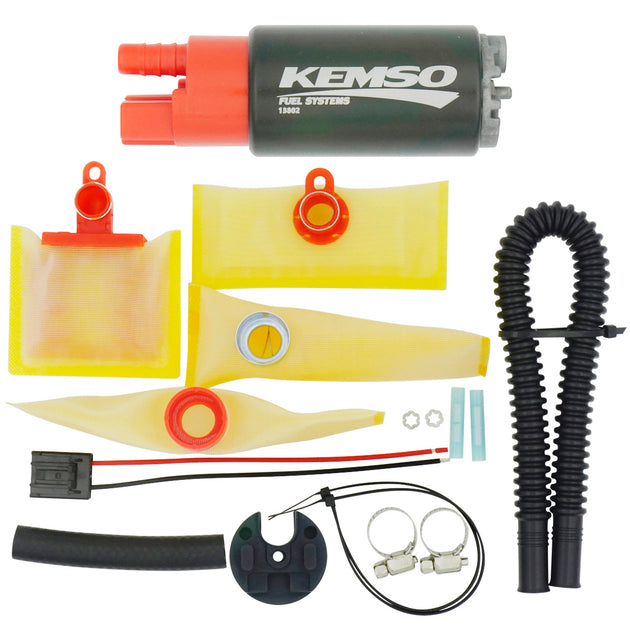 The parameter drift of the electronic system aggravates the control deviation. The resistance value deviation of the thermistor of the oil pressure sensor reaches ±5% at 100℃ (based on 25℃), resulting in a signal receiving error of ±0.5bar for the ECU. Honda R&D confirmed that the on-resistance of the MOSFET inside its Fuel Pump control module (FPCM) increased by 35% at 105℃, and the output current capacity decreased by 22%, causing the pump speed to drop from 5500rpm to 4800rpm. In the large-scale recall incident of Toyota in 2022, it was confirmed that the problem caused a reduction of approximately 15% in the pressure to warm up the vehicles, involving 1.28 million models including Camry.
The performance of worn parts deteriorates at high temperatures. When the carbon brush of the fuel pump wears out by more than 0.8mm (with a new part thickness of 3mm), the contact resistance of the commutator increases from 0.1Ω to 0.6Ω. In the actual test of the BMW N20 engine, the fluctuation range of the working current under the working condition of 90℃ reached ±14A (±6A when the engine was cold), resulting in the standard deviation of the oil pressure fluctuation expanding from 0.4bar to 1.1bar. If the superimposed filter screen is clogged (80% of the area is clogged), the system needs to increase the current by an additional 0.8A to maintain the flow rate, further raising the winding temperature to 130℃, thus forming a vicious cycle. According to modern Mobis statistics, this issue leads to 87% of the total faults in the hot start failure of oil pumps.
The optimization strategy requires collaborative governance of multiple systems. The installation of the fuel cooling circuit can control the temperature at ≤55℃ and reduce the density fluctuation to 1.2%. The discharge rate is reduced by 65% by using the laser-welded plunger pair (with the gap controlled at 2±0.5μm), such as the Volkswagen EA211 Evo2 high-pressure pump, which keeps the hot start pressure drop within 3%. In the 2019 Delphi technical solution verification, the current fluctuation of the upgraded PWM controller was compressed to ±4%. Combined with the oil rail pressure correction algorithm (response speed 15ms), the hot-state pressure difference was ultimately controlled within the target range of ±0.3bar.
The parameter drift of the electronic system aggravates the control deviation. The resistance value deviation of the thermistor of the oil pressure sensor reaches ±5% at 100℃ (based on 25℃), resulting in a signal receiving error of ±0.5bar for the ECU. Honda R&D confirmed that the on-resistance of the MOSFET inside its Fuel Pump control module (FPCM) increased by 35% at 105℃, and the output current capacity decreased by 22%, causing the pump speed to drop from 5500rpm to 4800rpm. In the large-scale recall incident of Toyota in 2022, it was confirmed that the problem caused a reduction of approximately 15% in the pressure to warm up the vehicles, involving 1.28 million models including Camry.
The performance of worn parts deteriorates at high temperatures. When the carbon brush of the fuel pump wears out by more than 0.8mm (with a new part thickness of 3mm), the contact resistance of the commutator increases from 0.1Ω to 0.6Ω. In the actual test of the BMW N20 engine, the fluctuation range of the working current under the working condition of 90℃ reached ±14A (±6A when the engine was cold), resulting in the standard deviation of the oil pressure fluctuation expanding from 0.4bar to 1.1bar. If the superimposed filter screen is clogged (80% of the area is clogged), the system needs to increase the current by an additional 0.8A to maintain the flow rate, further raising the winding temperature to 130℃, thus forming a vicious cycle. According to modern Mobis statistics, this issue leads to 87% of the total faults in the hot start failure of oil pumps.
The optimization strategy requires collaborative governance of multiple systems. The installation of the fuel cooling circuit can control the temperature at ≤55℃ and reduce the density fluctuation to 1.2%. The discharge rate is reduced by 65% by using the laser-welded plunger pair (with the gap controlled at 2±0.5μm), such as the Volkswagen EA211 Evo2 high-pressure pump, which keeps the hot start pressure drop within 3%. In the 2019 Delphi technical solution verification, the current fluctuation of the upgraded PWM controller was compressed to ±4%. Combined with the oil rail pressure correction algorithm (response speed 15ms), the hot-state pressure difference was ultimately controlled within the target range of ±0.3bar.
The parameter drift of the electronic system aggravates the control deviation. The resistance value deviation of the thermistor of the oil pressure sensor reaches ±5% at 100℃ (based on 25℃), resulting in a signal receiving error of ±0.5bar for the ECU. Honda R&D confirmed that the on-resistance of the MOSFET inside its Fuel Pump control module (FPCM) increased by 35% at 105℃, and the output current capacity decreased by 22%, causing the pump speed to drop from 5500rpm to 4800rpm. In the large-scale recall incident of Toyota in 2022, it was confirmed that the problem caused a reduction of approximately 15% in the pressure to warm up the vehicles, involving 1.28 million models including Camry.
The performance of worn parts deteriorates at high temperatures. When the carbon brush of the fuel pump wears out by more than 0.8mm (with a new part thickness of 3mm), the contact resistance of the commutator increases from 0.1Ω to 0.6Ω. In the actual test of the BMW N20 engine, the fluctuation range of the working current under the working condition of 90℃ reached ±14A (±6A when the engine was cold), resulting in the standard deviation of the oil pressure fluctuation expanding from 0.4bar to 1.1bar. If the superimposed filter screen is clogged (80% of the area is clogged), the system needs to increase the current by an additional 0.8A to maintain the flow rate, further raising the winding temperature to 130℃, thus forming a vicious cycle. According to modern Mobis statistics, this issue leads to 87% of the total faults in the hot start failure of oil pumps.
The optimization strategy requires collaborative governance of multiple systems. The installation of the fuel cooling circuit can control the temperature at ≤55℃ and reduce the density fluctuation to 1.2%. The discharge rate is reduced by 65% by using the laser-welded plunger pair (with the gap controlled at 2±0.5μm), such as the Volkswagen EA211 Evo2 high-pressure pump, which keeps the hot start pressure drop within 3%. In the 2019 Delphi technical solution verification, the current fluctuation of the upgraded PWM controller was compressed to ±4%. Combined with the oil rail pressure correction algorithm (response speed 15ms), the hot-state pressure difference was ultimately controlled within the target range of ±0.3bar.